
Introduction
Sacred Ecology has always been at the heart of Indian mythology. Imagine a world where polluting a river is akin to insulting your mother, and cutting down a tree feels like harming your own child. In ancient India, this was more than imagination: every river was revered as a goddess, each forest a holy sanctuary, and even the animals could speak as guides.
From the Vedic hymns to the epic tales of the Ramayana and Puranas, nature wasn’t just backdrop—it was a character, a teacher, a divine family member. Earth was a mother, rivers were life-giving goddesses, and trees stood equal to sons in virtue. These myths carry urgent lessons for us today.
As our modern world grapples with climate change and sustainability, we find that ancient environmental wisdom has been hiding in plain sight within these age-old stories. This isn’t about nostalgia; it’s about reviving a sacred duty (dharma) toward the earth.
Why it matters now: By exploring sacred ecology in myth, we uncover time-tested blueprints for living in harmony with nature. These tales urge us to see environmental care not as a new challenge but as a return to a revered tradition – one where harming nature was taboo and protecting it was heroic.
Table of Contents
- Rivers as Goddesses: Sacred Ecology Flows in Myth
- Sacred Ecology of the Forest: Lessons from the Wilderness
- Divine Animals and Green Dharma in Myth
- Dharma of Sacred Ecology: Earth as One Family
- FAQ: Ancient Myths and Environmental Wisdom
- Conclusion
Rivers as Goddesses: Sacred Ecology Flows in Myth
Water is sacred in Indian myth. Nearly all rivers are revered as living goddesses and have been worshipped since ancient times hindudharmaacharyasabha.org. The River Ganga (Ganges), for example, is more than a mighty waterway—she is Mother Ganga, a divine being whose purity could wash away sins. In one famous tale, King Bhagiratha prays for Ganga to descend from heaven to earth to cleanse his ancestors’ souls. When she finally flows down (with Shiva taming her torrents), it isn’t just a river’s origin story—it’s a lesson that water is a heavenly gift to be honored, not polluted.
Indian mythology consistently frames fresh water as life’s holiest foundation. To pollute a river was to offend a goddess. This reverence protected water sources in practical ways: people thought twice before desecrating something they worshipped. Ritual baths in rivers, offerings to river deities, and festivals like Ganga Dussehra kept human behavior in check with spiritual incentives. By personifying rivers as benevolent mothers and fierce protectors, ancient India’s myths doubled as ecological blueprints for water conservation.

Sacred Ecology of the Forest: Lessons from the Wilderness
Forests in ancient India were not feared frontiers – they were sacred classrooms. In Sanskrit, Aranya (forest) means a sanctuary. The Aranyakas – Vedic forest scriptures – were composed by sages living among rustling leaves and wildlife, seeking wisdom from nature. Thousands of years before modern “forest bathing,” sages knew that Prakriti (Nature) and Purusha (the Self) are intertwined, that any harm to one reflects in the other .
One beautiful hymn in the Rig Veda sings to Aranyani, the mysterious spirit of the forest, appreciating the “genius of the woods” and the nighttime sounds of cicadas and distant birds hindudharmaacharyasabha.org. The message is clear: the wild is not chaotic; it’s divine order in green disguise. Many epic heroes underwent spiritual growth in the wilderness, guided by wise sages and even animals. These tales honor the forest as a place where the human ego dissolves into oneness with all life.
Crucially, ancient Indians protected forests through the concept of sacred groves—sections of woodland left untouched because a deity resided there. These groves acted as early wildlife reserves, sheltering biodiversity under the banner of faith. And the respect was often codified: “Do not trouble the trees. Do not cut them,” urges a Vedic verse, “They provide protection to all living beings.”earthday.org. Such a rule, born out of reverence, had tangible ecological impact—preserving shade, soil, and habitat long before we spoke of carbon sinks and conservation.

Divine Animals and Green Dharma in Myth
Animals in Hindu mythology aren’t mere creatures; they are guides, guardians, and even gods. This is a culture that worships the cow as mother (Gomata), the elephant-headed Ganesha as a remover of obstacles, and the mighty rivers as Makara (crocodile) or goddess on a fish. By weaving animals into sacred roles, myths ensured a deep respect for fauna. Ahimsa, the principle of non-violence, extends to all beings – an ancient echo of biodiversity protection.
Consider the epic Mahabharata’s final lesson: as King Yudhishthira ascends toward heaven, only a faithful dog keeps him company. When told he cannot bring the dog into heaven, Yudhishthira chooses the animal over paradise, refusing to betray his loyal friend. This act of compassion moves the heavens; the dog reveals itself as Lord Dharma and grants Yudhishthira passage en.wikipedia.org. The moral was loud and clear: righteousness means standing by all life, not just human life. Similarly, in countless folk tales a nag (serpent) or a vanara (monkey) offers counsel to heroes, implying that nature’s voice speaks through these beings if we listen.
Historically, this ethos translated into surprisingly progressive practices. Over 2,300 years ago, Emperor Ashoka issued edicts banning animal sacrifice and establishing animal hospitals, effectively creating one of the world’s first wildlife protection laws chrisburns007.medium.com. He even planted shade trees for travelers and animals along roads. These real and mythic examples show how ancient India fostered an early form of Green Dharma – a duty of care toward all creatures.
“One tree is equal to ten sons.” – Padma Purana hindudharmaacharyasabha.org
Such bold proclamations hammered home that nurturing nature was the greatest legacy. Planting trees, for instance, was considered a sacred act, and cutting one down without need was a grievous sin hindutva.epochsandechoes.com. Ancient Indians clearly believed that preserving nature was among the highest virtues.

Dharma of Sacred Ecology: Earth as One Family
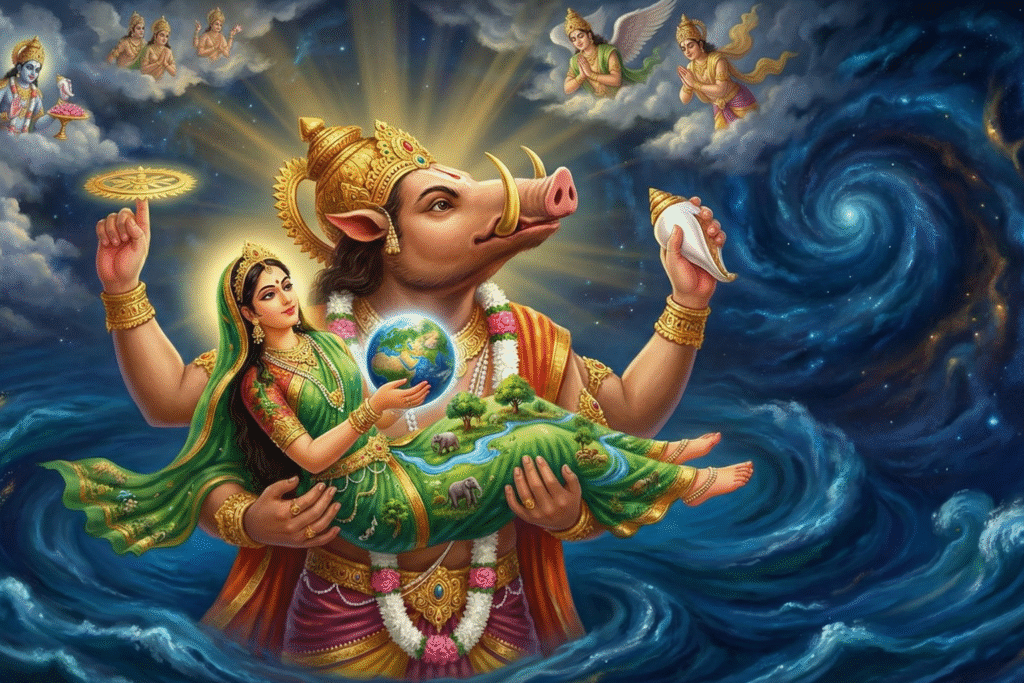
Ancient myths often frame environmental stewardship as a matter of dharma, or cosmic duty. The Earth is personified as Bhumi Devi, a goddess who, according to puranic lore, cries out when she is mistreated and rejoices when she is nourished. In one dramatic myth, the Earth goddess was rescued by Vishnu’s boar avatar (Varaha) after a demon submerged her beneath the ocean, symbolizing that restoring the planet is a divine mandate. This story from the Varaha Purana portrays saving the Earth as a sacred act of equilibrium – much like replanting a forest or cleaning a river today can feel like lifting the world from chaos.
The Maha Upanishad declares “Vasudhaiva Kutumbakam”, meaning “the Earth is one family”, where all beings are kin. Likewise, the Atharva Veda prays, “The Earth is my mother, and I am her son”, instilling a deep emotional bond with the land. To harm nature was to sin against Dharma and self – “to harm the Earth is a masochistic vice”.
This sacred outlook carried practical rules. Texts like the Varaha Purana extolled planting trees as a virtue and warned that polluting rivers or destroying forests would tip the cosmic balance. By embedding eco-conscious habits into spirituality, ancient India ensured that sustainability wasn’t just an idea – it was a way of life.
Fast forward to today’s environmental challenges, and these old teachings ring with new relevance. Modern science tells us the same truth in different words: humanity is not separate from nature but part of an indivisible web of life. Ancient Indians already lived by that truth. Their sacred ecology ethos encourages us to rekindle a relationship with Earth grounded in respect, reciprocity, and reverence. To heal the planet, we must once again treat it as sacred.
FAQ: Ancient Myths and Environmental Wisdom
Q: What is “Sacred Ecology” in Indian mythology?
A: Sacred Ecology refers to the way Indian myths and scriptures infuse nature with divinity and moral significance. Instead of viewing nature as an inert resource, ancient stories personify elements like earth, rivers, forests, and animals as sacred beings. This means caring for the environment was seen as a holy duty — harming a river or tree was not just environmentally wrong but a spiritual offense. Together, these myths created a kind of ecological code of ethics, embedding reverence for nature deep into spiritual life centuries ago.
Q: Which ancient texts talk about environmental wisdom?
A: The Vedas praise the elements of nature (for example, hymns that honor Earth as mother and water as purifying). The Upanishads declare the unity of all life, giving us the motto “Earth is one family.” The Puranas explicitly preach ecological duties – from planting trees to revering rivers as goddesses. Even the great epics weave in eco-conscious lessons through stories of compassion toward animals and respect for sacred rivers and forests.
Q: Are these ancient ecological ideas relevant today?
A: Absolutely. The climate and biodiversity crises have prompted many to seek wisdom in indigenous traditions. India’s sacred ecology offers a mindset shift — from dominating nature to partnering with nature. Modern movements in organic farming, plant-based diets, conservation, and climate activism resonate with principles like ahimsa (non-violence to all life) and dharma (duty to care for the Earth). As we build sustainable futures, these age-old teachings remind us that technology alone won’t save us without a reverence for the natural world. In fact, many traditional practices – such as protecting sacred groves or harvesting rainwater – are being revived today as sustainable solutions inspired by this ancient wisdom.
Conclusion
Our journey through Sacred Ecology in Indian mythology reveals a powerful truth: sometimes the newest solutions are hidden in the oldest stories. Long before environmentalism had a name, ancient sages and storytellers were weaving sustainability into the fabric of myth. They understood that nature is not separate from us – it is a living, divine part of our story. Rivers were mothers to be revered, forests were temples of wisdom, and every creature had its place in the grand tapestry of life.
In a world obsessed with progress, these myths gently remind us that progress means little if we lose our connection to Mother Earth. By seeing the sacred in the soil and the holy in the water, we might rediscover that preserving nature is not a burden, but a blessing. Like a modern-day yajna (sacred offering), every tree we plant and every river we clean becomes an act of worship, a fulfillment of ancient dharma.
Insight to carry forward: The tales of sacred ecology challenge us to act not as masters of the earth, but as caretakers and kin. When we honor nature as our ancestor and ally, sustainability ceases to be a struggle—it becomes a heartfelt duty and joy. To heal the planet, we must once again treat it as sacred.Join the conversation: What other myths or traditions inspire you to live in harmony with nature? Share your thoughts and let’s revive these ancient green lessons together. May the spirit of sacred ecology guide us in protecting our one earthly family for generations to come.