
Introduction
Redeemed demons – the very idea seems like a paradox. Picture a fearsome demon king kneeling in reverence before the very god he once defied. In Indian mythology, demons (Asuras and Rakshasas) are usually painted as villains to be vanquished. Yet there are tales when these so-called villains chose the light, proving that even the darkest beings can find devotion in their hearts. From King Bali’s legendary piety to Vibhishana’s defection for righteousness, these stories of redeemed demons challenge the black-and-white morality of typical demon-slaying tales. They reveal a rich moral complexity often overlooked, showing that redemption and virtue can blossom anywhere. This matters because it humanizes mythic antagonists and reminds us that no one is beyond redemption – a lesson as relevant now as it was in ancient times.
Table of Contents
- King Bali – The Asura King’s Heart of Gold
- Vibhishana – The Demon Who Defected for Dharma
- Prahlada – Devotion of a Demon Prince
- More Redeemed Demons and Lessons in Moral Complexity
- FAQ – Redeemed Demons in Mythology
- Conclusion
King Bali – The Asura King’s Heart of Gold
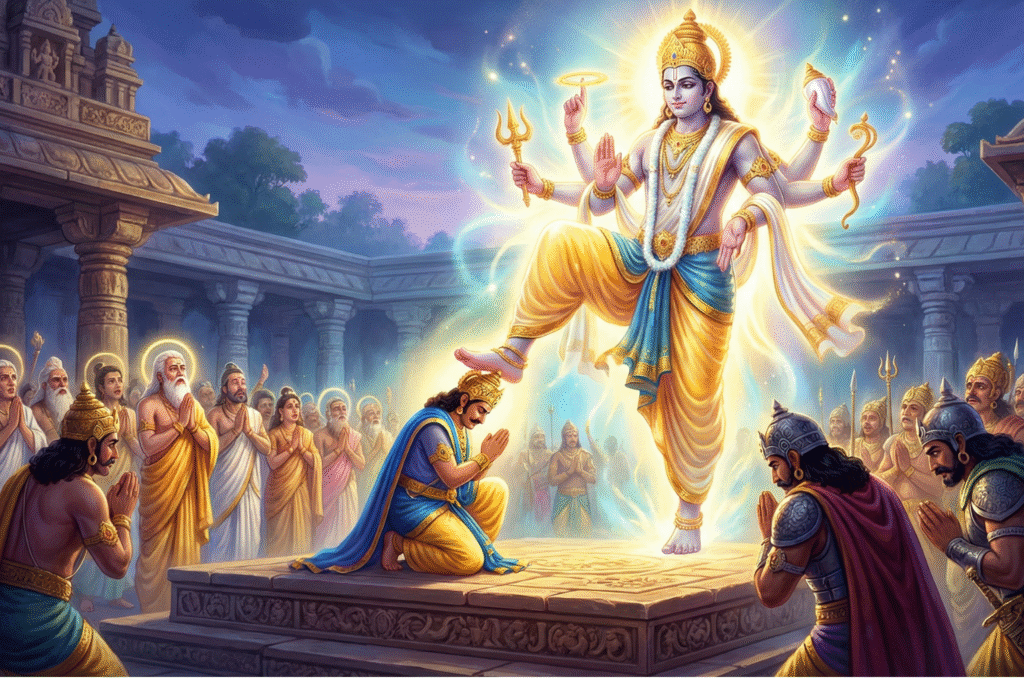
King Mahabali (Bali) stands out as one of Hindu lore’s most redeemed demons. An Asura monarch known for his unmatched generosity and piety, Bali once ruled the three worlds. The gods saw him as a threat after he conquered heaven, so Vishnu descended as Vamana, a dwarf brahmin, to test the king’s virtue. Bali humbly agreed to give Vamana “three paces of land” in charity – only to see the dwarf transform into a giant Trivikrama form.
In two monumental steps, Vishnu covered all of heaven and earth; with nowhere left for the third step, Bali bowed his head in surrender. Impressed by Bali’s humility and devotion, Vishnu granted him a boon instead of punishing him. According to legend, Vishnu was “pleased with his devotion” and allowed the Asura king to return once each year to visit his people britannica.com.
Bali’s tale proves that an Asura can have a heart of gold – his devotion and charity earned him divine grace instead of destruction.
Vibhishana – The Demon Who Defected for Dharma
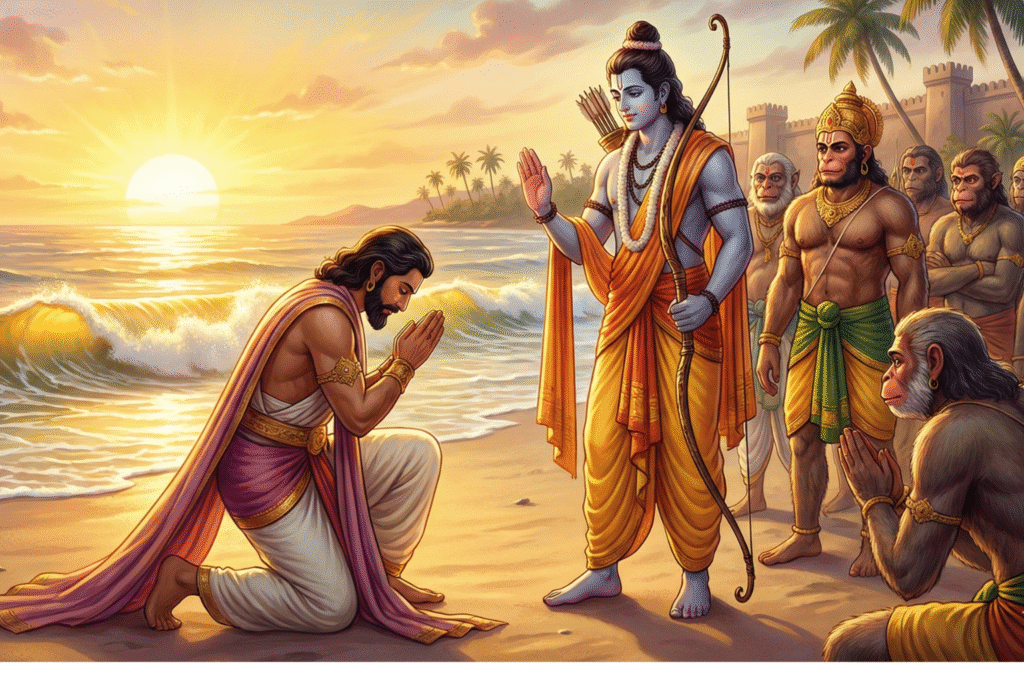
Not all demons remain loyal to darkness. Vibhishana, the younger brother of the evil King Ravana of Lanka, is a prime example of a redeemed demon. Born a Rakshasa (demon) prince, Vibhishana was deeply devoted to righteousness and truth from the start en.wikipedia.org. When Ravana abducted Sita and war loomed, Vibhishana repeatedly urged his brother to follow dharma – to return Sita and make peace. Scorned for his good counsel, he made a fateful choice: Vibhishana “turned his back on Ravana, and defected to Rama’s side, owing to his dharma” .
Crossing enemy lines, he surrendered to Lord Rama. Many saw it as betrayal, but Rama and the gods saw Vibhishana’s loyalty to righteousness above all. His defection was rewarded – after Rama slew Ravana, Vibhishana was crowned the new King of Lanka. In the Ramayana, Vibhishana’s story shows that upholding truth and dharma matters more than one’s clan or birth. A demon by birth but a devotee by action, he transformed into a redeemed demon who stood on the side of good. His tale teaches that doing the right thing may mean standing against one’s own, but it leads to honor and grace.
Prahlada – Devotion of a Demon Prince
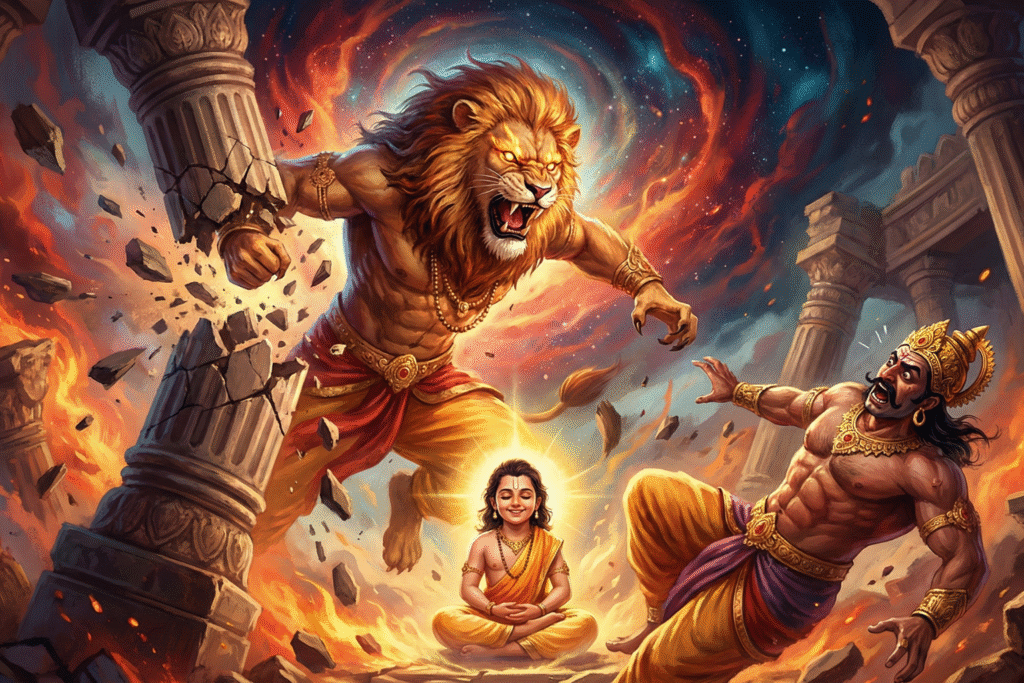
One of the most celebrated redeemed demons is actually a child. Prahlada was born a prince of the Asuras – his father was the tyrant Hiranyakashipu, an enemy of the gods. Yet from a young age Prahlada showed unshakeable bhakti (devotion) to Lord Vishnu, much to his demon father’s fury . The boy’s faith was so pure that no evil could touch him. Legend says Prahlada declared Vishnu’s presence everywhere – even in a stone pillar. Enraged, Hiranyakashipu smashed the pillar, only to unleash Narasimha, Vishnu’s man-lion avatar, who emerged to protect Prahlada. Narasimha slew the wicked king, cradling Prahlada safely in his blood-soaked lap.
[Image: Narasimha, the fierce avatar of Vishnu, protects young Prahlada from his demonic father – an iconic tale of innocence and faith triumphing in a redeemed demon’s life | Alt text: redeemed demons – Narasimha saves the devotee Prahlada]
Through it all, Prahlada never wavered in chanting Vishnu’s name. Ancient scripture hails him as a model devotee: “He is known for his staunch devotion to Vishnu” en.wikipedia.org, a shining example of piety blooming in demonic soil. After Hiranyakashipu’s defeat, Prahlada inherited the throne but ruled with virtue and kindness, proving that goodness can flourish anywhere. In the end, Prahlada’s unwavering love for God transformed him from a “demon prince” into a saint. His life illustrates that devotion is stronger than heredity – even born among demons, one can live as a beacon of good.
(See our article on “Narasimha and Prahlada’s Faith” for a deeper dive into this story of devotion.)
More Redeemed Demons and Lessons in Moral Complexity
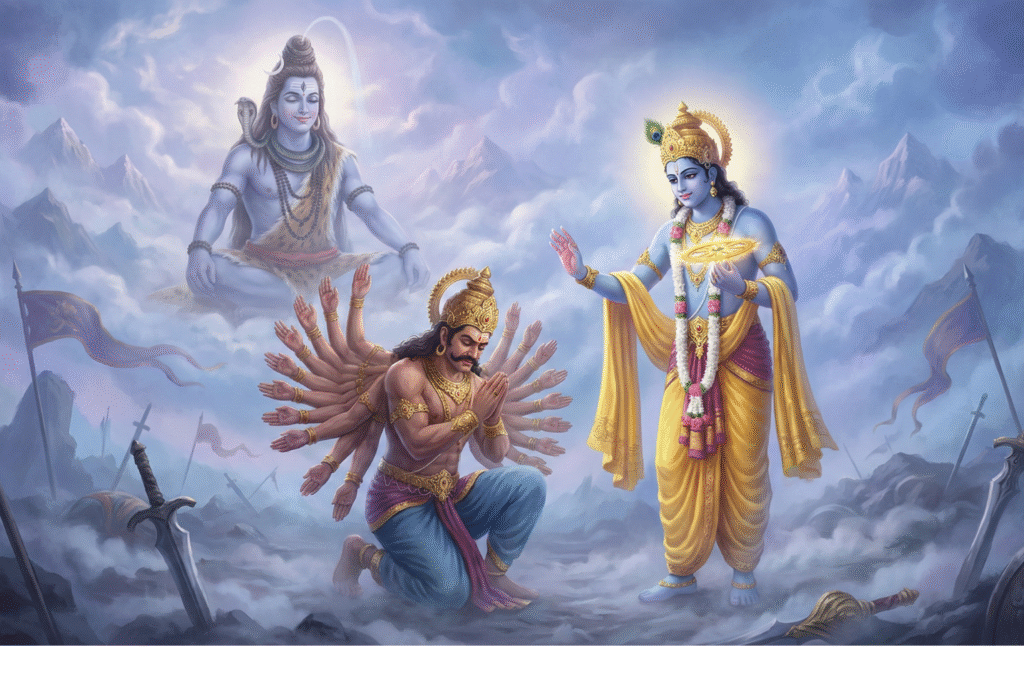
Hindu mythology offers many shades of gray – it’s not just these three. Other figures also showed virtue in unlikely places. For instance, Shishupala, who spent his life hating Lord Krishna, was ultimately granted moksha (liberation) at the moment Krishna slew him – proof that even lifelong antagonism can end in grace. Similarly, Banasura, a thousand-armed Asura devoted to Lord Shiva, was defeated by Krishna but spared out of respect for Shiva. Humbled, Banasura’s life was spared – demonstrating that prior devotion can earn divine mercy even for a demon.
These stories underscore a profound theme: moral complexity. Hindu epics deliberately blur the lines between “good gods” and “evil demons.” An Asura can be generous and pious (like Bali) or loyal to dharma (like Vibhishana), while gods can exhibit arrogance or deceit at times. The takeaway is that character – one’s actions, choices, and values – matters more than one’s birth or label en.wikipedia.orgen.wikipedia.org. As the Bhagavata Purana symbolically notes, even saints can be born in demon families and vice-versa en.wikipedia.orgen.wikipedia.org. Redeemed demons teach us that anyone is capable of change. They humanize the antagonists and encourage us to look beyond labels, recognizing the potential for redemption and light in every soul. Therefore, these mythic tales remain relevant, inspiring us to overcome our own inner “demons” through devotion, humility, and righteousness.
FAQ – Redeemed Demons in Mythology
Q: Who are “redeemed demons” in Hindu mythology?
A: Redeemed demons are mythological demons (Asuras or Rakshasas) who turned away from evil and embraced virtue or devotion. Examples include the pious Asura King Mahabali (Bali), the righteous demon prince Vibhishana who sided with Rama, and the devotee Prahlada who worshiped Vishnu despite his demonic lineage. These figures are revered for their goodness despite being born among demons.
Q: Why did Vibhishana join Rama against his brother Ravana?
A: Because Vibhishana valued dharma (righteousness) above family loyalty en.wikipedia.org. He could not support his brother Ravana’s unjust abduction of Sita. When Ravana refused to listen to reason, Vibhishana defected to Rama’s side, seeking to uphold righteousness. In reward for his loyalty to truth, Rama later crowned Vibhishana the King of Lanka.
Q: What is the story of King Bali and how did he redeem himself?
A: Mahabali (King Bali) was an Asura king known for great piety and generosity. When Vishnu’s avatar Vamana tested him by asking for three steps of land, Bali surrendered everything – even offering his head for the final step. Pleased by Bali’s humility, Vishnu spared him and granted him a boon to return once a year (the festival of Onam celebrates this). Bali’s humility and devotion effectively “redeemed” him, turning what could have been a defeat into a spiritual victory.
Conclusion
In the vibrant tapestry of Hindu mythology, the saga of redeemed demons adds a deeply humanizing thread. These nuanced narratives of Asuras with a heart of gold show that light can emerge from the darkest places. Together, their stories illustrate that righteousness and devotion can transcend one’s origins. The moral complexity of these tales invites us to reflect on our own lives – to recognize that redemption is always within reach, and that each of us can overcome our inner demons through virtue and devotion.Feel inspired by these tales of unlikely devotion? Join the conversation in the comments – which redeemed demon’s story moved you the most? If you enjoyed this journey into the heart of mythic “villains,” do share this post and explore more illuminating legends on VedicWars.com.