
Epic What-Ifs have the power to unravel the tapestry of destiny in our cherished Indian epics. What if a single twist of fate had altered the course of the Mahabharata or Ramayana? Picture the battlefield of Kurukshetra with Karna fighting alongside the Pandavas instead of against them. Envision Queen Sita never having to leave Ayodhya in exile. These vivid scenarios ignite our curiosity and invite us to see timeless stories in a new light. Alternate history in mythology isn’t just fanciful – it’s a way to explore deeper truths.
By reimagining crucial turning points, we uncover fresh moral insights and emotional lessons. In modern times, fans and authors alike are embracing an almost “Marvel What If” approach to Hindu epics, blending beloved lore with imaginative twists. This creative exploration matters because it keeps ancient tales alive, relevant, and endlessly intriguing for each generation.
Table of Contents
- Epic What-If #1: Karna Fights for the Pandavas
- Epic What-If #2: Sita Never Goes into Exile
- Epic What-If #3: Ravana’s Side of the Story
- Epic What-If #4: Duryodhana’s Perspective
- Modern Epics Reimagined: Authors Explore Epic What-Ifs
- FAQ
- Conclusion
Epic What-If #1: Karna Fights for the Pandavas
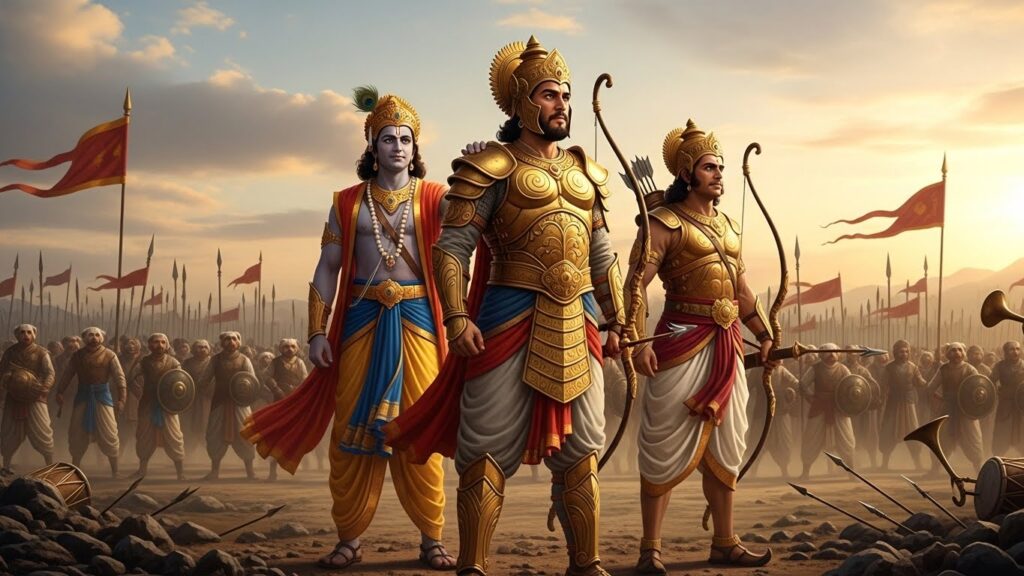
In the original Mahabharata, the tragic hero Karna remains loyal to his friend Duryodhana and battles against his own brothers, the Pandavas. Yet Krishna at one point revealed Karna’s true identity (the eldest Pandava by birth) and urged him to switch sides. Karna refused out of loyalty and personal honor, setting the stage for his doom. Now imagine an epic what-if: Karna accepts Krishna’s offer and fights for the Pandavas. How differently would the Kurukshetra war unfold?
Firstly, Duryodhana would lose his greatest champion. Karna and Bhishma were the pillars of the Kaurava war effort; if Karna defected, Duryodhana’s confidence and chances of victory would crumble reddit.com. The war might end quickly – or perhaps not even occur, as the balance of power tilts heavily to the Pandavas. Arjuna and Karna, once archrivals, would fight side by side under Krishna’s guidance. With their combined might, key opposing warriors like Bhishma and Drona could be neutralized faster.
This alternate scenario also raises intriguing questions of dharma (duty) and loyalty. Karna’s lifelong mantra was loyalty to the hand that fed him; he felt indebted to Duryodhana for treating him with respect when society shunned him. If Karna chose blood ties over friendship, it would underscore a different moral – that standing with one’s righteous kin for the greater good outweighs personal grudges. The Pandavas would gain not just a powerful ally but an elder brother, potentially even a different king. (Indeed, as the eldest Pandava,
Karna might have claimed the throne of Hastinapur in Yudhishthira’s stead!) Such a shift could mean a less devastating war and a united family at the end – a decidedly happier ending for all.Ultimately, this epic what-if shines a spotlight on Karna’s poignant dilemma: personal honor vs. greater good. It invites us to ponder how a single decision in a tale of fate could transform a story of fraternal war into one of reconciliation. Karna fighting for the Pandavas would not only change who wins – it would change the very heart of the Mahabharata’s message about loyalty, fate, and the cost of bitterness.
Epic What-If #2: Sita Never Goes into Exile
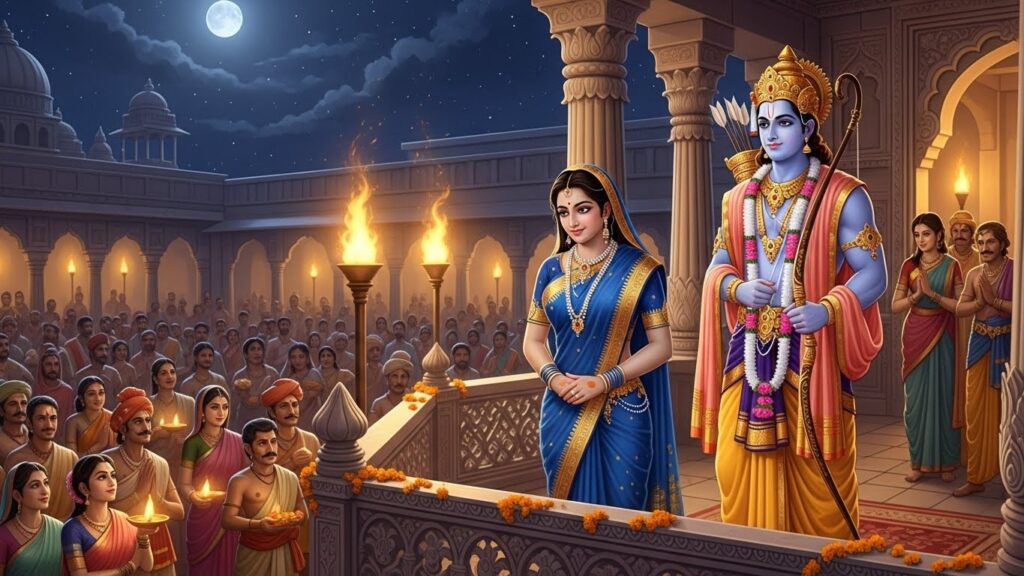
One of the most heartbreaking episodes in the Ramayana is Sita’s second exile. Victorious after defeating Ravana, Lord Rama faces gossip among his subjects questioning Sita’s purity. Bound by kingly duty and public opinion, Rama sends his pregnant wife away to the forest, and Sita endures years of lonely exile raising their twin sons. It’s a tragic turn that has troubled devotees for centuries. Now imagine an epic what-if twist: Sita never goes into exile – she remains by Rama’s side as queen of Ayodhya.
Visualize the scene: Rama, instead of bowing to pressure, stands up for Sita and proclaims her innocence before all. The people of Ayodhya, seeing their king’s unwavering trust in his wife, accept Sita as the righteous queen. In this alternate timeline, Sita would raise her sons, Luv and Kush, within the comforts of the royal palace rather than in a hermitage. The kingdom might still face challenges (perhaps some subjects would initially disapprove), but Rama would address their doubts through dialogue and wisdom instead of exile.
This scenario offers a powerful modern moral: the importance of personal integrity and justice over blind adherence to public demand. Rama is often lauded as Maryada Purushottam (the ideal man who puts dharma above all). But what if dharma meant defending his innocent wife instead of yielding to gossip? By keeping Sita by his side, Rama would exemplify a leader who upholds righteousness over reputation.
The epic’s message would shift toward gender justice and trust in relationships. Sita, unbroken by any exile, remains a symbol of strength – now with her virtue openly validated. In essence, it shows that true honor lies in standing by truth even when society disagrees.Interestingly, many contemporary storytellers have tried to reframe Sita’s story to highlight her agency. Authors like Devdutt Pattanaik and Chitra Banerjee Divakaruni portray Sita as more than a victim – as a courageous woman with a voice (Divakaruni’s The Forest of Enchantments is a great example).
While these retellings don’t erase the exile, they do inspire readers to question it. Our what-if scenario goes further to imagine a Ramayana where compassion triumphs over social convention. It invites us to ask: if the ultimate royal couple had defied societal norms, would that have set a precedent for a more equitable world in those ancient times?
Epic What-If #3: Ravana’s Side of the Story
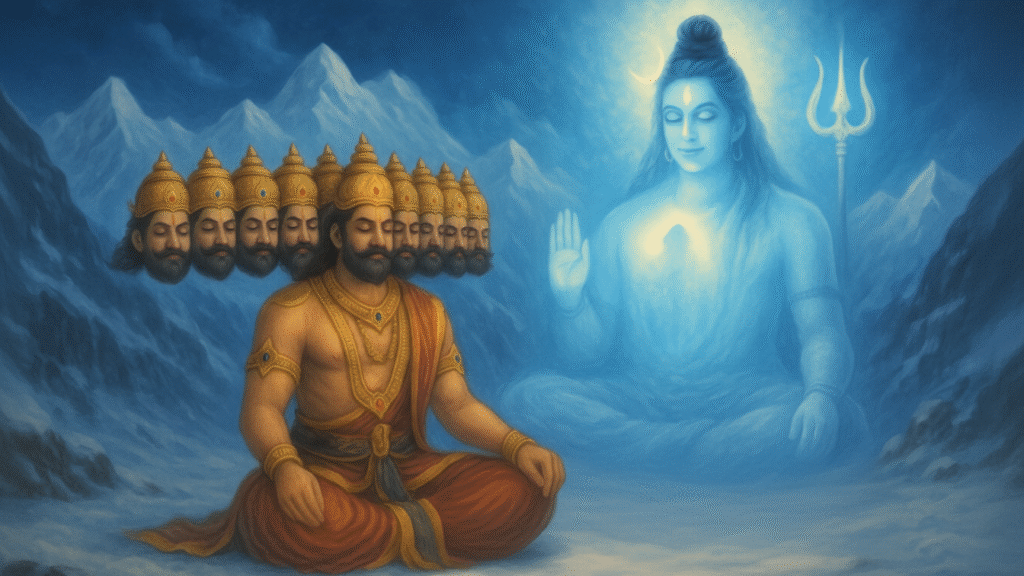
Every epic needs a villain, and in the Ramayana, Ravana – the ten-headed demon king of Lanka – plays that role to perfection. But what if we turn the story around and hear Ravana’s side? Imagine an epic what-if where Ravana himself narrates the Ramayana from his perspective. Suddenly, the familiar tale transforms: the kidnapping of Sita might be seen not as a vile act of lust, but perhaps as Ravana’s misguided attempt to avenge an insult to his sister (Surpanakha), or even a desperate effort to challenge Rama’s authority. We begin to see the “Ravanaayan” instead of the Ramayan.
Modern authors have actually explored this perspective in depth. In Anand Neelakantan’s novel Asura: Tale of the Vanquished, Ravana emerges as a complex, learned man – a brilliant scholar and devoted Shiva worshiper – whose ambition and pride lead to his fall timesofindia.indiatimes.com. Through Ravana’s eyes, the war against Rama becomes a struggle to defend his people and honor, rather than a straightforward case of villainy. Likewise, Amish Tripathi’s Raavan: Enemy of Aryavarta delves into the formative life of Ravana, painting a portrait of a man shaped by suffering and circumstances.
By giving voice to Ravana, this what-if scenario challenges our notion of “good vs evil.” We realize that even “villains” don’t see themselves as villains. Perhaps Ravana felt justified – wronged by fate or by the gods – and his story is one of hubris and heartbreak rather than pure evil. The moral lessons from a Ravana-centric retelling center on how arrogance and vengeance can consume even the mightiest of souls. It teaches empathy – urging us to understand the why behind a person’s actions.
As readers, we might find ourselves almost empathizing with Ravana’s plight, even as we recognize his flaws. The epic thereby gains a new layer: perspective is everything. Just as a gem reveals different facets when turned, an epic reveals new truths when seen through a different character’s eyes.
Epic What-If #4: Duryodhana’s Perspective
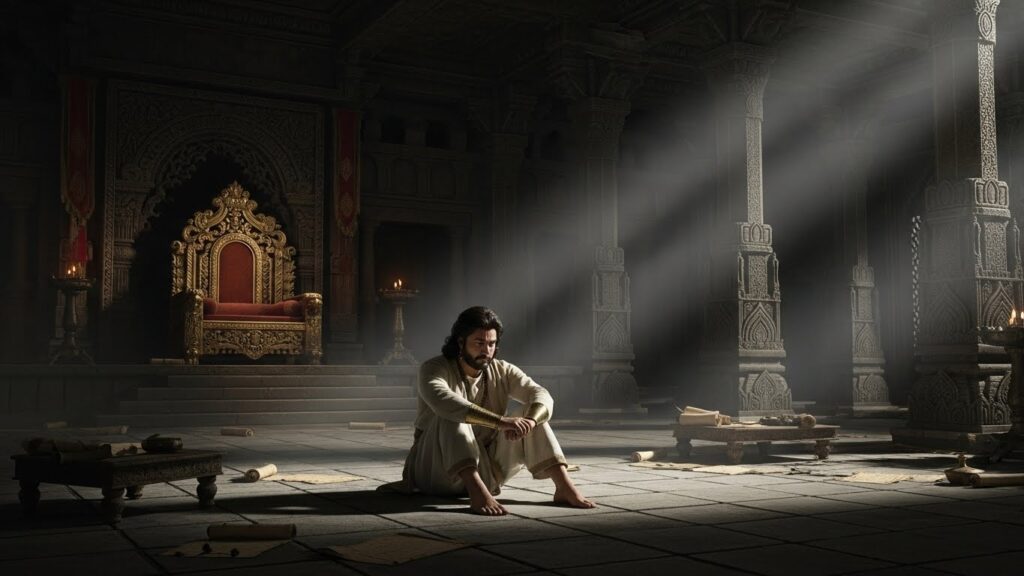
In the Mahabharata, Prince Duryodhana is cast as the prideful antagonist whose envy and stubbornness spark the great war. He’s the man who ordered the disrobing of Draupadi, who refused to give the Pandavas their due, and who fought bitterly to the end. Yet, consider an epic what-if that flips the script: What if we retell the Mahabharata from Duryodhana’s own perspective? How would the story look through the eyes of the man who lost everything?
Taking Duryodhana’s point of view unveils a very different narrative. Instead of a one-note villain, we see a frustrated elder brother watching his kingdom’s throne being claimed by nephews of a rival branch of the family. We see a man who feels cheated out of his birthright – after all, Hastinapur was ruled by his blind father Dhritarashtra, and by lineage Duryodhana was the rightful heir. From his standpoint, the Pandavas’ rise threatens his legacy and even the unity of the Kuru kingdom. His hostility toward them, then, stems from a sense of injustice as much as jealousy.
Modern retellings like Neelakantan’s Ajaya series boldly cast “Suyodhana” (a name meaning “good warrior,” used for Duryodhana) as a sympathetic figure striving to reform a stratified society. Through this lens, the dice game and even Draupadi’s humiliation appear as tragic mistakes of a flawed man rather than monstrous deeds of a demon. None of this excuses Duryodhana’s misdeeds, but it does humanize him. We begin to ask uncomfortable questions: Was Duryodhana truly evil, or was he a product of his upbringing and a rigid social order? Could the catastrophic war have been avoided if the Pandavas tried to understand their cousin’s grievances (and vice versa)?By exploring Duryodhana’s mindset, this epic what-if underscores that history is written by the victors.
The Mahabharata we know is the Pandavas’ victory saga, but in Duryodhana’s tale, the heroes and villains trade places. The lesson here is humility: every story has multiple sides, and even in myth, no one is the villain of their own story. Duryodhana’s perspective teaches us about the poisonous nature of envy and pride, yes – but also about the pain of feeling unjustly marginalized. It’s a cautionary tale that power and resentment, if not reconciled, can destroy a family and a nation.
Modern Epics Reimagined: Authors Explore Epic What-Ifs
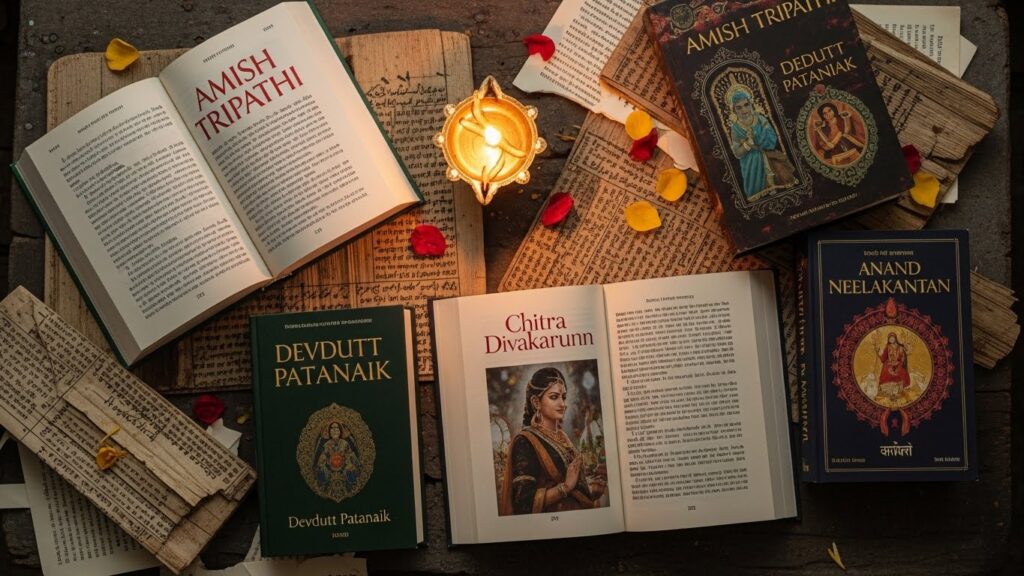
The fascination with epic what-ifs isn’t confined to casual fan discussions – it’s become a thriving theme in literature. Indian storytellers in recent years have embraced reimagining the epics through alternate viewpoints, backstories, and inventive twists. By doing so, they breathe new life into ancient tales. As author Amish Tripathi notes, “Myths are part of our DNA… The effort to modernize it keeps it alive.”brainyquote.com Readers today connect deeply with these re-envisioned epics because they speak to contemporary values while respecting the core narrative.
Here are a few notable modern retellings that echo the spirit of epic what-ifs and alternate perspectives:
- Anand Neelakantan – Asura: Tale of the Vanquished (2012) retells the Ramayana through Ravan’s point of view, showing the demon king in a new lighttimesofindia.indiatimes.com. Neelakantan’s Ajaya series similarly reimagines the Mahabharata from the Kaurava side, portraying Duryodhana (Suyodhana) in a sympathetic light.
- Amish Tripathi – Ram Chandra Series (2015–present) employs a multi-linear narrative to retell the Ramayana from multiple perspectives. In Scion of Ikshvaku, Sita: Warrior of Mithila, and Raavan: Enemy of Aryavarta, Amish explores each main character’s backstory and motivations in depthtimesofindia.indiatimes.com. His earlier Shiva Trilogy (2010–2013) also took a “what if” approach by depicting Lord Shiva as a mortal hero whose deeds earn him divinity.
- Devdutt Pattanaik – Jaya and Sita: An Illustrated Retelling of the Ramayana bring forth alternate insights by compiling folk variants and lesser-known tales. Pattanaik often highlights voices of characters like Sita, Draupadi, and others, showing that even within traditional lore there are divergent versions and lessons.
- Chitra Banerjee Divakaruni – The Palace of Illusions (2008) gives us the Mahabharata through Draupadi’s eyes, and The Forest of Enchantments (2019) tells Sita’s version of the Ramayana. These novels stay true to the main plot but radically shift the perspective, offering feminine insights and emotional depth to events we thought we knew.
- Kavita Kane – Through works like Lanka’s Princess (2017) – the story of Ravana’s sister Surpanakha – and Karna’s Wife, Kane focuses on the women behind the epics’ events, often those sidelined in the original narratives. Lanka’s Princess makes readers ponder whether bad things are always done by bad people, or rather by ordinary people who make bad choices timesofindia.indiatimes.com. It’s a subtle form of what-if storytelling that questions whose story gets told.
All these reimaginings, in essence, perform a similar magic: they take well-trodden tales and ask, “What if we look at this from a new angle?” Whether it’s a full-blown alternate history or simply a shift in narration, the result is a richer understanding of the epic. We realize that the Ramayana and Mahabharata are not monoliths set in stone – they are living stories, capable of evolving with time. By engaging with epic what-ifs, modern readers find contemporary meaning in ancient wisdom, bridging the gap between past and present.
FAQ
Q: What are “Epic What-Ifs” in Indian mythology?
A: “Epic What-Ifs” are imaginative scenarios where we change a key event or perspective in a famous epic like the Mahabharata or Ramayana. By asking “what if X had happened differently,” we explore alternate histories of these myths. It’s a creative way to gain new insights from old stories – almost like a mythological parallel to Marvel’s What If series, but for Indian epics.
Q: What if Karna had fought for the Pandavas in the Mahabharata?
A: This popular hypothetical scenario suggests the Kurukshetra war’s outcome would shift dramatically. Without Karna on Duryodhana’s side, the Kauravas would lose their mightiest warrior. The war might have ended much sooner (or been avoided entirely), with a decisive Pandava victory. Morally, it highlights how Karna’s loyalty to Duryodhana, while admirable, ultimately led to tragedy – and if he had chosen family over pride, the story might have concluded on a less tragic note. (Fans often debate this epic what-if in forums, pondering a world where the Pandavas and Karna reconcile and rule together.)
Q: What if Sita was never exiled in the Ramayana?
A: If Sita stayed in Ayodhya as Queen, the Ramayana’s tone would be very different. Rama would be remembered not for a heartrending sacrifice of personal happiness, but for boldly defending his innocent wife against societal doubts. Sita would raise her sons as a respected royal mother. This scenario emphasizes compassion over custom – suggesting that the ideal ruler might have been one who kept his family intact rather than appeasing public opinion. It’s a what-if that offers a more uplifting ending, where dharma is upheld by protecting the innocent instead of punishing them for others’ skepticism.
Q: Which modern authors have explored alternate takes on Indian epics?
A: Several contemporary writers have reimagined the epics. Devdutt Pattanaik and Amish Tripathi are two popular examples – Pattanaik’s works retell myths with commentary and forgotten tales, while Tripathi’s novels (like the Shiva Trilogy and Ram Chandra series) cast gods as flesh-and-blood heroes in new storylines. Anand Neelakantan wrote Asura (Ravana’s viewpoint) and Ajaya (Duryodhana’s viewpoint), flipping the epics upside-down. Novelists like Chitra Banerjee Divakaruni and Kavita Kane have given voices to epic heroines. All these works let us revisit familiar tales with fresh eyes, much like engaging in epic what-if thinking.
Q: Why are alternate history retellings of epics so popular?
A: Alternate retellings resonate because they make ancient stories feel new and relevant. By speculating on different outcomes or highlighting overlooked voices, readers get to participate in the storytelling. It’s exciting and thought-provoking – almost like discovering a secret history. These stories also address modern values (like equality, empathy, questioning blind faith) within mythological narratives.
They don’t replace the original epics, but enrich our understanding of them and keep us engaged. Remember, as Bhishma wisely said, “The ways of dharma are subtle.”human.libretexts.org Right and wrong in these stories aren’t always black-and-white, and exploring what-ifs helps unveil those subtle layers in a way that speaks to today’s audience.
Q: Are there traditional versions of the epics that differ from the mainstream story?
A: Yes – the Indian epics themselves have countless traditional variations. For example, in some folk and Jain tellings of the Ramayana, Sita is portrayed as Ravana’s daughter, which dramatically alters the narrative. Regional Mahabharata lore sometimes sympathizes with the Kauravas. The very existence of these versions shows that ancient storytellers also engaged in a form of “what-if” or alternative perspective storytelling. Our modern epic what-ifs are really a continuation of that age-old tradition of reinterpreting and renewing the tales for each era.
Conclusion
The great Indian epics have endured for millennia because they invite us to reflect, question, and find meaning in every generation. Exploring Epic What-Ifs in these tales – whether imagining different choices or hearing untold perspectives – is not just playful speculation. It’s a profound way to engage with the Ramayana and Mahabharata, allowing us to glean new wisdom from old stories. By asking “What if?”, we shine a light on the road not taken in mythic history and often discover that the essence of the story only grows richer.
Ultimately, these alternate narratives highlight that truth and dharma are complex. As Bhishma admitted in the Mahabharata, “The ways of dharma are subtle.”human.libretexts.org Right and wrong, hero and villain – they can trade places when we view events from another angle. By reimagining the epics, we learn empathy for characters fated to play roles assigned by destiny. We also remind ourselves that even our most sacred stories can be approached with fresh curiosity.
So go ahead – ponder these epic what-ifs and draw your own insights. What new lesson might emerge if you tweak the tale just a bit? The possibilities are endless, and each one brings us closer to the timeless heart of India’s beloved epics. Feel free to share your own epic what-if scenarios or favorite retellings in the comments! And stay tuned to VedicWars for more creative journeys into the world of mythology and history.
Sources: 【2】 Reddit – What if Karna joined his brothers? (discussion)reddit.com; 【9】 BrainyQuote – Amish Tripathi on modernizing mytholog ybrainyquote.com; 【37】 Times of India – Modern retellings that give Ramayana a fresh perspectivevtimesofindia.indiatimes.com 【40】 Mahabharata, tr. by Larry A. Brown (LibreTexts) – Bhishma on dharma human.libretexts.